
Profit and Margins
Gross Profit Formula: How to Calculate It (With Examples)

By Kim Stokes, Board-level CFO and Chartered Accountant
Published · 8 min read
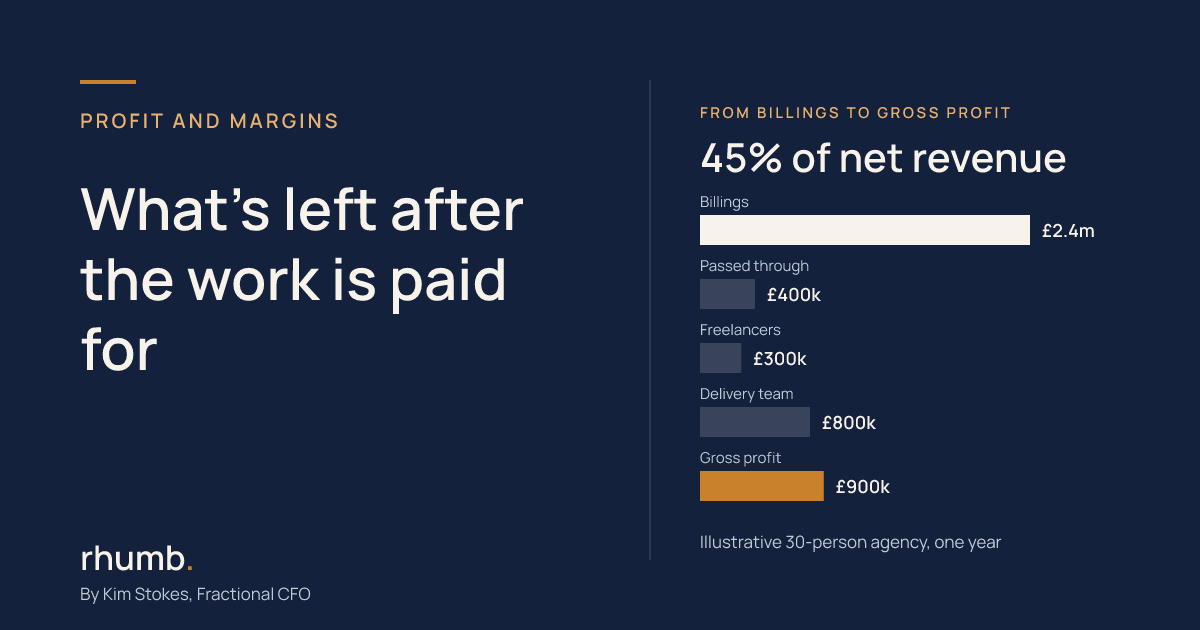
Revenue is the number everyone celebrates. Gross profit is the one that tells you whether the work was worth doing.
The gross profit formula is simple: revenue minus cost of sales. Divide the answer by revenue and you have your gross profit margin, the share of each pound that's left once the work itself is paid for. It's the first level of profit in your accounts, and the operating and net margins further down are all built on it.
What is gross profit?
Gross profit is what's left from your sales after you've paid the direct costs of making or delivering them. It ignores overheads such as rent, admin salaries and software, which come out further down the profit and loss account.
In UK company accounts, the standard layout puts it right at the top. Format 1 in the accounts regulations for small companies lists turnover, then cost of sales, then gross profit or loss, before any overheads appear.
What goes in cost of sales
The test is simple: would this cost disappear if you didn't sell anything? What that covers depends on your business.
| Type of business | Usually in cost of sales | Usually in overheads |
|---|---|---|
| Product business | Materials, manufacturing, packaging, delivery to customers | Office rent, marketing, finance and admin staff |
| Agency or consultancy | Freelancers, production, media bought for clients, salaries of people doing client work | Leadership, new business, finance, office, software |
| Retailer | Stock sold, inbound shipping | Shop rent, staff, utilities |
Agencies vary more than most on where they put salaries. Some treat the whole team as overheads, which flatters gross margin and hides which work makes money. Putting delivery salaries in cost of sales gives you a gross profit you can actually act on.
The gross profit formula
Gross profit = Revenue − Cost of sales
Revenue here is your sales for the period, excluding VAT. Cost of sales is the direct cost of delivering those sales in the same period.
The gross profit margin formula
Gross profit margin (%) = Gross profit ÷ Revenue × 100
The margin is the number to compare over time, because it stays meaningful as revenue grows or shrinks. £100,000 of gross profit sounds the same in a good year and a bad one. A margin that's fallen from 50% to 42% doesn't.
How to calculate gross profit: two worked examples
Both examples use made-up figures to show how the sums work.
A product business
You sell £400,000 of products in a year. Materials, manufacturing and delivery cost £240,000.
- Gross profit: £400,000 − £240,000 = £160,000
- Gross profit margin: £160,000 ÷ £400,000 × 100 = 40%
An agency
Agencies often bill clients for media or production they buy on the client's behalf. That money passes straight through, so it's worth looking at margin on net revenue as well as on total billings.
| Illustrative 30-person agency, one year | Amount |
|---|---|
| Total billings | £2,400,000 |
| Media and production passed through to clients | £400,000 |
| Net revenue | £2,000,000 |
| Freelancers | £300,000 |
| Delivery team salaries, employer National Insurance and pensions | £800,000 |
| Gross profit (£2,400,000 − £400,000 − £300,000 − £800,000) | £900,000 |
| Gross margin on total billings (£900,000 ÷ £2,400,000) | 37.5% |
| Gross margin on net revenue (£900,000 ÷ £2,000,000) | 45% |
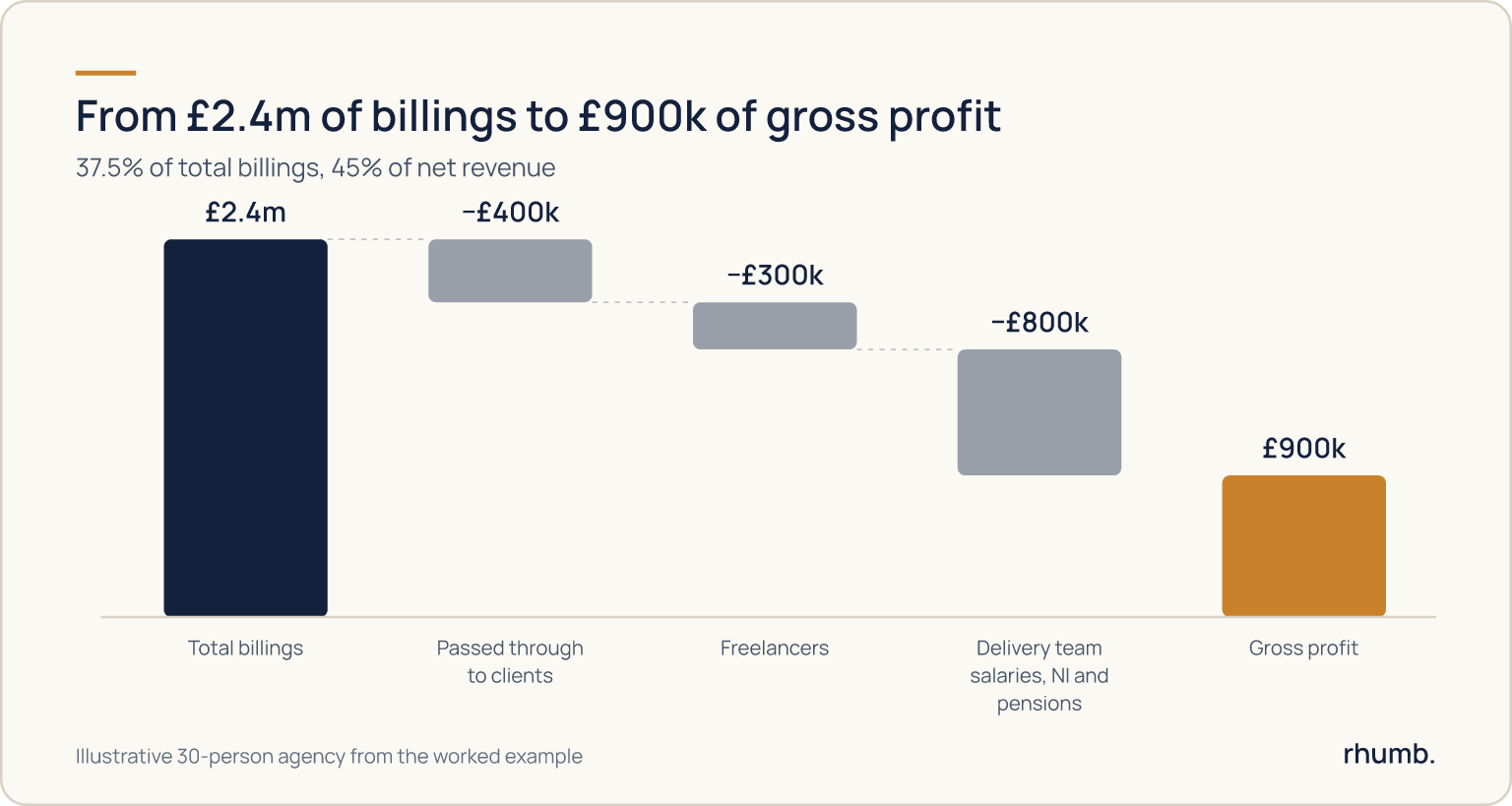
Same business, same year, two different margins. Neither is wrong, but pick one and stick to it, or a month heavy with media spend will look like a collapse in profitability.
Gross margin vs markup
Markup divides gross profit by cost rather than by revenue:
Markup (%) = Gross profit ÷ Cost of sales × 100
In the agency example, cost of sales is £1.5m, so £900,000 of gross profit is a 60% markup but a 37.5% margin on billings. Mixing the two up is one of the quickest ways to underprice. Add 40% to your costs thinking you're earning a 40% margin, and you're actually earning about 29%.
Where you'll find gross profit in your accounts
In your own monthly management accounts, gross profit should sit near the top of every profit and loss report, with the margin alongside it. The most useful versions show it against budget, against last year and by client.
In published accounts it's usually missing. Small companies can choose not to send a profit and loss account to Companies House, and the Format 2 layout in the regulations doesn't show a gross profit line at all. Plans to make small companies file one from April 2028 were paused by the government in October 2026, so that won't change any time soon. If you're sizing up a competitor or a business you might buy, don't expect to find their margin on the public record.
What a good gross margin looks like
It depends on what you sell and how you count cost of sales, which is why industry averages so often mislead. A reseller, a manufacturer and a creative agency can all be healthy at very different margins. The more useful comparisons are with yourself: your margin this month against the last 12, and one client against another.
That second comparison is where the surprises are. Three clients billing exactly the same can leave you with very different gross profit once the hours and freelancers they took are counted.
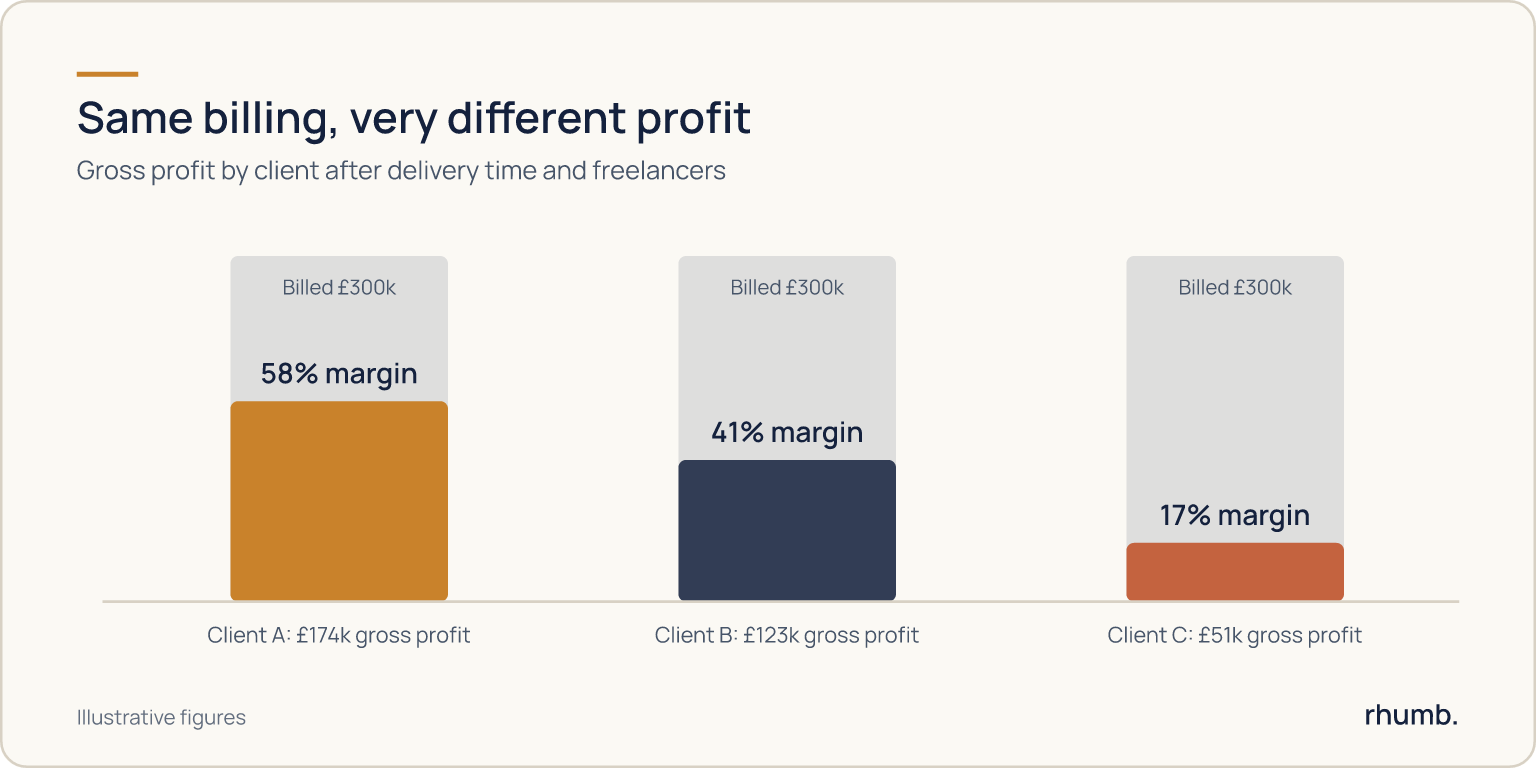
The client at 17% often feels like one of your best. It's big, it's busy and it's been with you for years. That's exactly why nobody looks at it closely.
How to improve your gross margin
Price
A price rise with no extra delivery cost goes straight to gross profit. In the agency example, charging 5% more on net revenue with the same delivery costs adds £100,000, lifting gross margin on net revenue from 45% to about 47.6%.
Most businesses aren't doing it. In the ONS business survey for September 2026, a third of UK firms said the prices they pay had gone up, but only 12% said they'd raised the prices they charge. That gap comes straight out of gross margin. Price is also the quickest way to move your break-even point, and the pricing model you use decides how easily you can change it.
Scoping and time
Unbilled extra rounds and work that drifts beyond the brief all sit in cost of sales with no matching revenue. Tracking time against each job, and agreeing what's in and out of scope before work starts, protects margin more reliably than chasing cheaper suppliers.
People costs
For a service business, people are most of cost of sales, so changes to employment costs show up here first. Employer National Insurance rose from 13.8% above £9,100 to 15% above £5,000 in April 2025, as the government's policy paper sets out, and HMRC's rates for 2026/27 keep it there.
For someone earning £40,000, that's £986 more a year. If the example agency's delivery team were 17 people on that salary, roughly its £800,000 once National Insurance and pensions are added, the change costs about £16,800 a year. That's close to a full point off gross margin on net revenue, unless prices moved too.
Freelancer mix
Freelancers give you flexibility, but they usually cost more per day than your own team. If the same specialist is booked month after month, compare the annual freelance spend with the full cost of hiring.
Gross profit is where profit starts, not where it ends. Overheads come off next to give you operating profit, then interest and tax. Even a healthy margin won't stop you running short of cash if clients pay late, and when you come to sell, a buyer will look hardest at EBITDA.
FAQs
What is the gross profit formula?
The gross profit formula is revenue minus cost of sales. Revenue is your sales for the period excluding VAT, and cost of sales is the direct cost of delivering them, such as materials, freelancers or the salaries of people doing client work. Overheads like rent and admin aren't included.
How do you calculate gross profit margin?
Divide gross profit by revenue and multiply by 100. If you sell £400,000 and your cost of sales is £240,000, gross profit is £160,000 and your gross profit margin is 40%. Use the same revenue figure each month so the trend is comparable.
Is gross profit the same as turnover?
No. Turnover, or revenue, is everything you've sold. Gross profit is what's left after the direct cost of delivering those sales. A business can grow its turnover quickly while its gross profit stands still, which usually means it's discounting or the work is costing more to deliver.
Do salaries go in cost of sales?
The salaries of people who deliver your product or service usually do, along with their employer National Insurance and pension. Salaries for leadership, sales, finance and admin usually sit in overheads. Agencies vary, so check how yours are treated before comparing margins with anyone else's.
What is a good gross profit margin?
There's no single answer, because margins depend on what you sell and how you define cost of sales. Compare your margin with your own last 12 months and across your clients and services. A margin that's falling steadily matters more than how it compares with an industry average.
Start with the full guide
Profit Margins Explained: Gross, Operating, Net and EBITDA
About the author
Kim Stokes
Kim is a board-level CFO and chartered accountant (SAICA). She was a manager at Deloitte before moving into the boardroom, where she has led finance, people and operations for agency groups. Through rhumb, she helps growing agencies tighten commercial control and make better decisions with their numbers.