
The Fractional CFO
How Much Does a Fractional CFO Cost in the UK?

By Kim Stokes, Board-level CFO and Chartered Accountant
Published · 7 min read
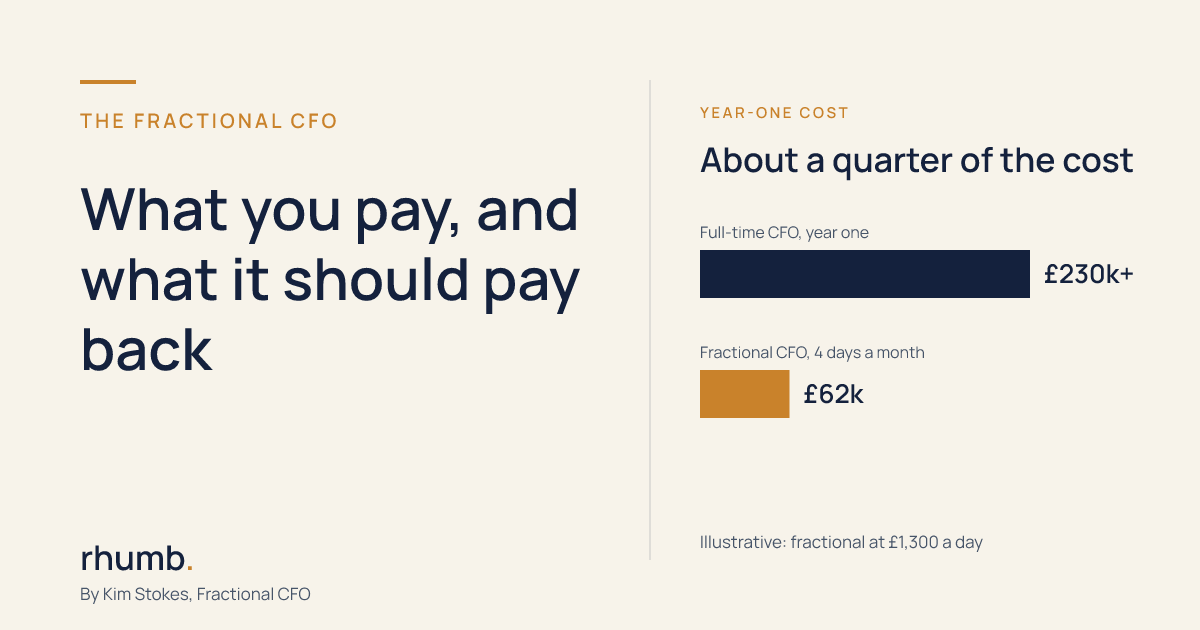
You know the business needs more senior financial thinking. What you don't know is whether you can afford it, or whether it will earn back more than it costs.
The answer depends on how much time you need and what you need it for. Below are the usual ways UK fractional CFOs charge, what that adds up to each month, how it compares with hiring full-time and how to tell whether it will pay for itself. If the role itself is still a bit fuzzy, start with what a fractional CFO does day to day.
How fractional CFOs charge
Monthly retainers
The most common model. You agree a number of days a month and a fixed fee. You get a predictable cost, and the CFO can build a proper rhythm: month-end review, forecast update, board pack and time for strategic work in between.
Day rates
Some fractional CFOs bill by the day, either for ad hoc work or on top of a retainer during busy periods like a fundraise or year end. The best independent benchmark is the Institute of Interim Management's 2026 survey, which puts the average interim day rate at £907, and £1,004 in the private sector. That average covers all kinds of interim roles. A fractional CFO who has sat on boards, knows your sector and has led fundraises, acquisitions or exits will usually charge more, often £1,300 a day or more, because the work is more senior and the decisions are bigger.
Fixed-price projects
A defined piece of work for a set fee: a pricing review, a three-year financial model, preparation for a bank or investor, or getting ready for sale. Projects are a good way to test the relationship before a retainer.
What a fractional CFO costs each month
Most of the cost comes down to how many days you need. Here's what that looks like at £1,300 a day, a typical rate for an experienced, board-level CFO. Less experienced finance leaders may charge closer to the £1,000 private-sector average; the most senior can charge more. All figures exclude VAT.
| Days a month | Monthly cost | Year one | Typical use |
|---|---|---|---|
| 2 days | about £2,600 | about £31,200 | Senior input on decisions, forecasts and pricing |
| 4 days | about £5,200 | about £62,400 | Monthly reporting, planning and hands-on support |
| 8 days | about £10,400 | about £124,800 | Fundraising, acquisitions or preparing for sale |
Expect a minimum commitment of around three months from most fractional CFOs, which is about how long it takes to make a real difference. Your own figure will move with the day rate and the complexity of the work.
How it compares with hiring a full-time CFO
Salary is only part of the cost of a full-time CFO. Robert Half's latest salary guide puts CFO pay outside financial services at £150,000 to £275,000, and executive search firms typically charge 25% to 35% of first-year salary to find one. This comparison uses the bottom of that salary range.
| Cost | Full-time CFO (illustrative) | Fractional CFO, 4 days a month |
|---|---|---|
| Base salary or fees | £150,000 | £62,400 (4 days a month at £1,300 a day) |
| Employer National Insurance (15%) | about £22,000 | None |
| Pension (say 5%) | £7,500 | None |
| Bonus, benefits, equity | Often £15,000 or more | None |
| Recruitment fee (25% to 35% of salary) | £37,500 to £52,500 in year one | None |
| Approximate year-one cost | £230,000 or more | £62,400 |
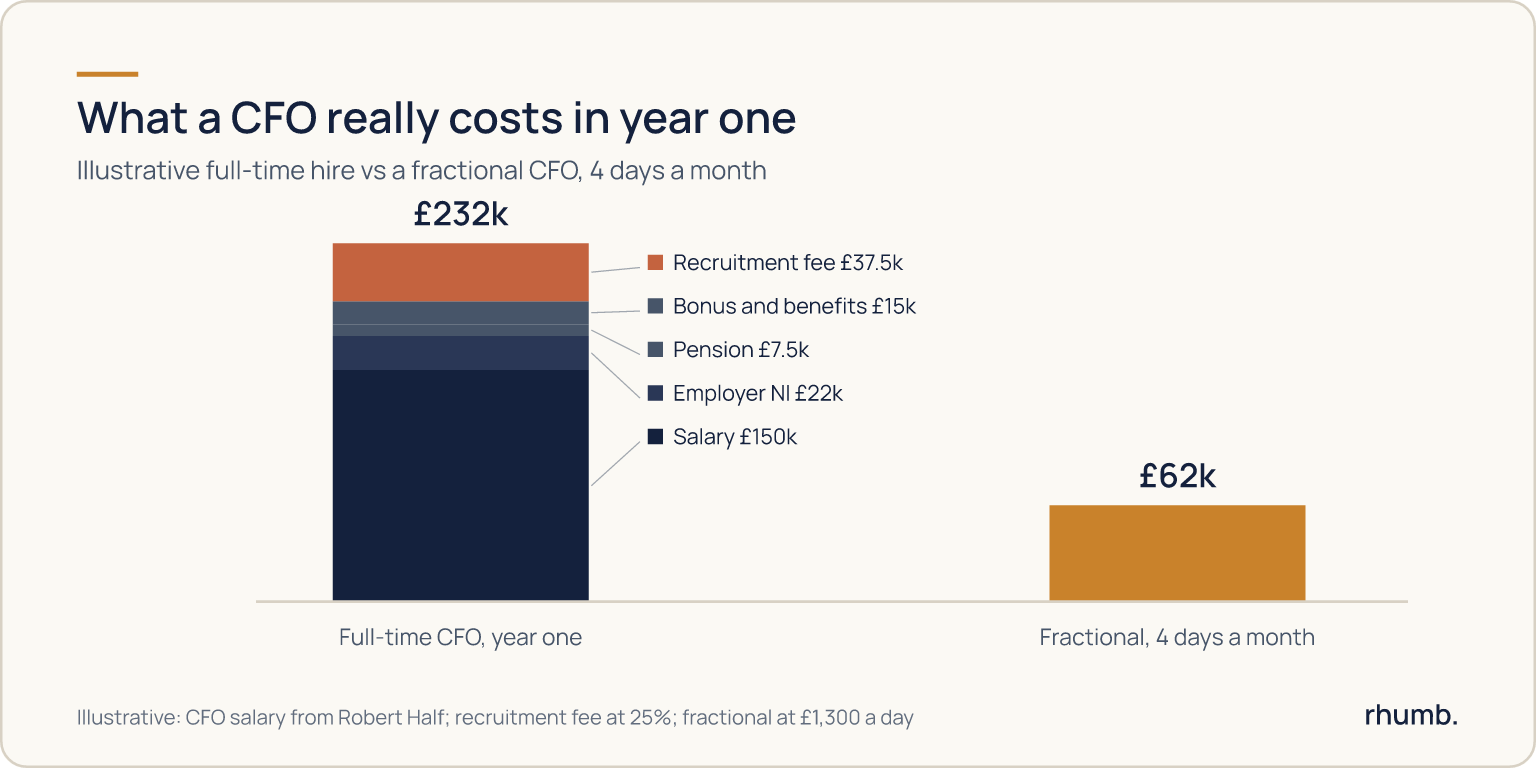
Employer National Insurance is 15% on earnings above the secondary threshold for 2026/27. Bonus and pension are illustrative, and fractional isn't always right. If you need someone in the business every day leading a large finance team, a full-time hire is the better choice. For most businesses under about £10m of revenue, though, a full-time CFO is more capacity than the job needs.
What affects the price
- The number of days, by far the biggest driver.
- Seniority. Board-level and sector experience cost more and usually get results faster.
- Several companies, overseas entities, investors or a pending sale, all of which add work.
- The state of your books. If the bookkeeping needs fixing first, that time has to come from somewhere.
- Whether a team comes with it. Some firms bundle bookkeeping and management accounts, while others focus on the senior role and work with your existing accountant.
How to judge whether it's worth it
Judge a fractional CFO by what changes, not by the hours. The value usually comes from a handful of places:
- Pricing is often the biggest. McKinsey found that a 1% price rise, with volumes held steady, lifted operating profit by about 8% for a typical large company. On fee income of a few million, a modest rate review can cover a year of retainer by itself, and the numbers behind agency day rates and retainers show why.
- Spotting a cash squeeze weeks early, through a rolling cash flow forecast, can save expensive short-term borrowing or a missed payroll.
- With a third of UK firms paying more for their inputs in the ONS's September 2026 survey, someone checking supplier and staff costs against prices earns their keep.
- Stronger forecasts usually mean better terms from banks, landlords and investors.
- A sense-check before a senior hire, office move or acquisition can be worth more than anything else.
- Clean, predictable numbers can add materially to what a buyer pays.
A useful rule: agree up front what success looks like at 90 days, and review it with the CFO. If you can't point to a decision that was better because of the work, something's wrong.
Signs you're paying too much, or too little
You're probably overpaying if you mostly get reports nobody acts on, or if the CFO is doing work your bookkeeper or accountant should be doing. You're probably underinvesting if big decisions keep being made on gut feel, or if your fractional CFO never has time for anything beyond month end.
If you're still weighing up whether the business is ready, the seven signs you've outgrown your finance function are a quick self-check, and if part of you is wondering whether your accountant could cover it, the line between a fractional CFO and an accountant is clearer than most people expect.
FAQs
How much does a fractional CFO cost per month in the UK?
It depends mostly on the number of days. It depends on the number of days and the CFO's experience. At £1,300 a day, a typical rate for a board-level CFO, two days a month costs about £2,600 and four days about £5,200, excluding VAT. Less senior finance support can cost closer to £1,000 a day.
What is a typical fractional CFO day rate?
The Institute of Interim Management's 2026 survey puts the average UK interim day rate at £907, and £1,004 in the private sector. Board-level finance leaders, sector specialists and anyone handling fundraising or exits tend to charge at or above that.
Is a fractional CFO cheaper than a full-time CFO?
Almost always, because you only pay for the time you use and there are no employer costs, benefits or recruitment fees. The trade-off is availability: a fractional CFO isn't in the business every day.
Is there a minimum contract?
Many fractional CFOs ask for three months, because it takes that long to understand a business and deliver real change.
Can I start with a one-off project?
Yes. A pricing review, cash forecast or financial model is a good way to see how someone works before committing.
Is VAT charged on fractional CFO fees?
Usually, if the CFO or their firm is VAT registered. If your business is VAT registered too, you can normally reclaim it.
Start with the full guide
What Is a Fractional CFO? A Guide for Founders
About the author
Kim Stokes
Kim is a board-level CFO and chartered accountant (SAICA). She was a manager at Deloitte before moving into the boardroom, where she has led finance, people and operations for agency groups. Through rhumb, she helps growing agencies tighten commercial control and make better decisions with their numbers.