
The Fractional CFO
What Is a Fractional CFO? A Guide for Founders

By Kim Stokes, Board-level CFO and Chartered Accountant
Published · 9 min read
Your accountant files the accounts. Your bookkeeper keeps Xero tidy. And still, every big decision, from your next senior hire to raising your rates or signing a new lease, lands on your desk with nobody to check the numbers with you.
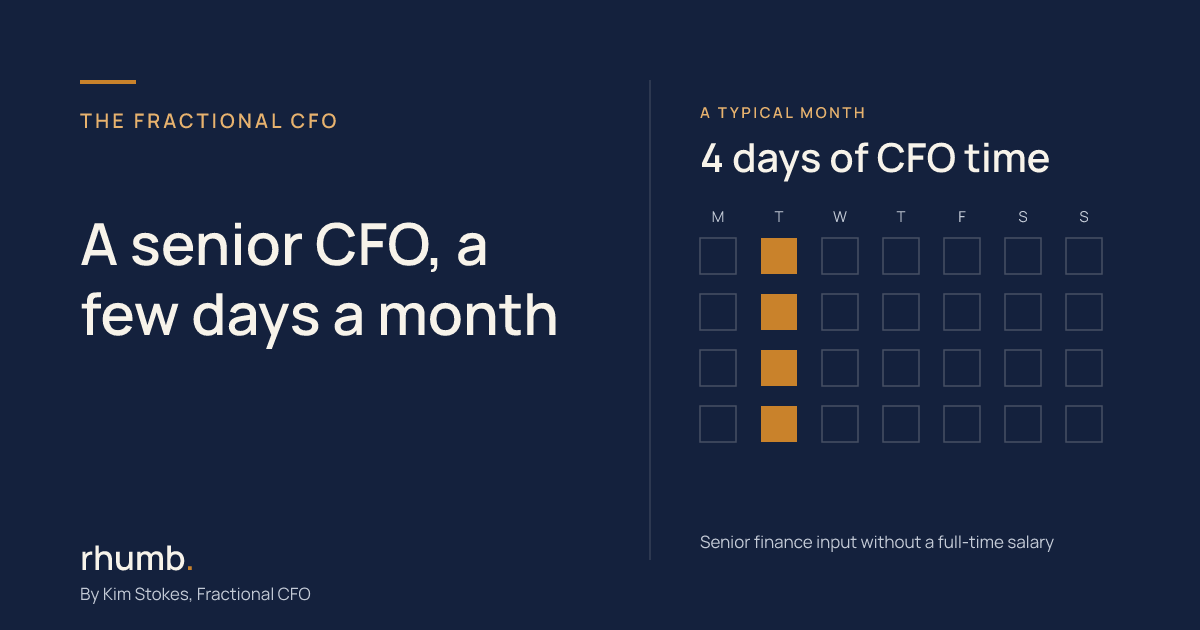
A fractional CFO fills that gap. You get a senior finance leader for a few days a month, without a six-figure salary or a long-term commitment. Below you'll find what the role looks like day to day, what it costs and how to tell whether your business is ready for one.
What does fractional CFO mean?
"Fractional" means you buy a fraction of someone's time. A fractional chief financial officer does the job a full-time CFO would do (setting financial strategy, owning the numbers the board relies on, steering the big commercial calls) for a set number of days each month.
You'll also hear part-time CFO, outsourced CFO or portfolio CFO. The labels overlap. Seniority and scope are what set the role apart: a fractional CFO isn't there to process invoices or chase receipts, but to help you run the business on numbers you trust.
What does a fractional CFO actually do?
Every business is different, but the work tends to fall into five areas.
Cash and forecasting
The first job is nearly always cash. A fractional CFO will build or rebuild your forecast so you can see weeks and months ahead, not just today's balance: when payroll, VAT and corporation tax will hit, and what happens if a big client pays 30 days late. A rolling 13-week cash flow forecast is usually where it starts.
Late payment is a big reason this comes first. Government research puts the number of UK businesses that close each year because of late payments at around 14,000, with affected firms owed about £17,000 on average at any one time. A forecast won't make clients pay faster, but it gives you weeks to react rather than days.
Profit, margin and pricing
Revenue is easy to see. Profit by client, service or project is much harder, and it's where most of the value hides. A fractional CFO works out which clients and services make you money, then helps you act on it through pricing, scoping and resourcing. If gross, operating and EBITDA margin still blur together, how each profit margin works is a useful primer.
Costs aren't standing still either. In the ONS's latest business survey, a third of UK firms reported paying more for the goods and services they buy in September 2026. If your prices haven't moved, your margin has.
Reporting your board can act on
Management accounts that arrive six weeks after month end, full of numbers nobody discusses, don't help anyone. A fractional CFO shapes a monthly pack around the handful of measures that drive your business, explains what changed and why, and turns it into decisions. That might be utilisation, debtor days, gross margin by service line or cash runway.
Funding, banks and investors
When you need to borrow, raise money or renegotiate with the bank, how you present the numbers counts as much as the numbers themselves. A fractional CFO builds the model, prepares the story and sits in the room with you. Lending is picking up, with gross SME bank lending up 9% to £68bn in 2025 according to the British Business Bank, but lenders still want a forecast they can believe before they say yes.
Growth, value and exit
If you might sell one day, bring in a partner or hand over to the next generation, the work starts years before the deal. Buyers usually value private businesses on a multiple of EBITDA and on how clean and predictable the numbers are. Starting early means you negotiate from strength rather than scrambling through due diligence.
Fractional CFO vs accountant vs bookkeeper
All three are useful. They do different jobs.
| Bookkeeper | Accountant | Fractional CFO | |
|---|---|---|---|
| Main focus | Recording transactions accurately | Compliance: accounts, tax, filings | Strategy and decisions |
| Looks at | This week and this month | Last year | The next 3 to 36 months |
| Typical output | Clean books, reconciled bank | Year-end accounts, tax returns | Forecasts, pricing, board packs, plans |
| Question they answer | "Is it recorded properly?" | "Is it filed correctly?" | "What should we do next?" |
A good fractional CFO works alongside your accountant, not instead of them, and the split of work between a fractional CFO and your accountant is usually clear once you see both roles side by side.
When does a business need a fractional CFO?
No single revenue figure flips the switch. It's usually a mix of complexity and stakes, and these signs come up most often:
- You're growing, but the bank balance doesn't grow with you.
- You can't say with confidence which clients or services are most profitable.
- You're about to make a big commitment: a senior hire, a new office, an acquisition or a move into the US.
- A bank, investor or buyer has asked for forecasts you don't have.
- Your board or partners meet, but nobody leaves with clear, numbers-led decisions.
- You've hit a ceiling and want a sharper plan for the next three years.
If three or more sound familiar, the seven signs you've outgrown your finance function go into each one in more depth.
How much does a fractional CFO cost?
Most UK fractional CFOs work on a monthly retainer tied to a set number of days, with projects priced separately. You're paying for a few days of senior time a month rather than a full-time salary plus employer National Insurance, pension, bonus and recruitment fees. At rhumb, support ranges from a Sounding Board of up to two days a month to an Embedded or Dedicated role, each priced to the business, and the full breakdown of what a fractional CFO costs in the UK compares it line by line with a full-time hire.
What you should expect in the first 90 days
A fractional CFO should earn their keep quickly. If the first three months are only about "getting to know the business", ask harder questions.
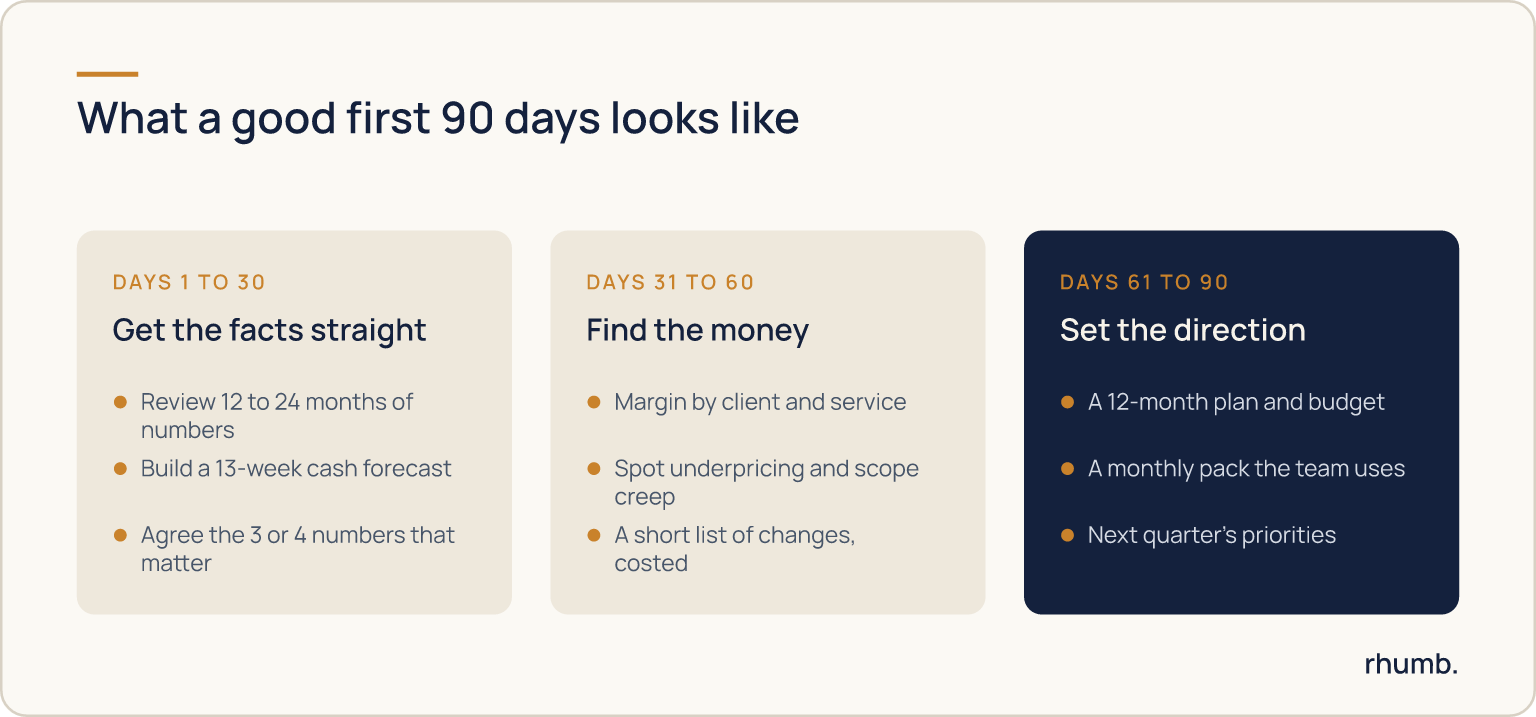
Days 1 to 30: get the facts straight
Review the last 12 to 24 months of accounts, the chart of accounts, pricing and the client list. Build a rolling 13-week cash forecast. Agree the three or four numbers that matter most and how they'll be reported each month.
Days 31 to 60: find the money
Work out margin by client and service. Spot the work you're underpricing, the scope creep you're absorbing and the costs that have drifted. Agree a short list of changes, from price rises to payment terms, with the likely effect of each.
Days 61 to 90: set the direction
Turn the findings into a plan and budget for the next 12 months. Give your leadership team a monthly pack they use. Decide what the next quarter should focus on, whether that's pricing, funding, a new market or getting ready to sell.
Is a fractional CFO right for agencies?
Agencies and consultancies tend to benefit most, because their economics are unusually sensitive. You sell people's time, so small shifts in utilisation, day rates and scope have an outsized effect on profit. Cash is lumpy, with retainers, project milestones and pass-through costs for media, talent or production. And growth often adds cost before it adds margin.
Pricing is usually the biggest lever. McKinsey's analysis of large companies found that a 1% price rise, with volumes unchanged, lifted operating profit by around 8%, and for a people business with thinner margins the effect is often bigger. Someone who has run agency numbers before will know where to look first, from day rates, retainers and value-based fees to the way work in progress and deferred income distort monthly profit.
How to choose a fractional CFO
Credentials count, but fit counts for more. When you're comparing options, ask:
- Have you done this job full-time? Board-level experience is different from advisory experience.
- Do you know my sector? Agency economics, SaaS metrics and manufacturing margins are not the same thing.
- What will be different in 90 days? Look for specific outcomes, not a list of reports.
- How do you work with my accountant? The answer should be "closely".
- What's the minimum commitment? Three months is common and sensible. Twelve months up front is a lot to ask.
- Who will do the work? Some firms sell a senior name and deliver a junior team.
FAQs
What is a fractional CFO in simple terms?
A senior finance leader you share with other businesses. They work for you a few days a month on the strategic part of a CFO's job: forecasting, pricing, reporting and big decisions.
How many days a month does a fractional CFO work?
Usually two to eight, depending on your size and what's going on. Many businesses start small and add days around a fundraise, acquisition or year end. A lot of the value comes from being on hand when a decision comes up.
Is a fractional CFO worth it for a small business?
It is if your decisions are big enough. One pricing change, a late-paying client spotted early or a better bank deal can cover the cost several times over. If your finances are simple and stable, a good accountant may be enough for now.
What's the difference between a fractional CFO and an interim CFO?
An interim CFO is usually full-time for a fixed period, often covering a gap or leading a specific change. A fractional CFO is part-time and ongoing.
Can a fractional CFO help with selling my business?
Yes, and it's one of the most valuable times to have one. They'll prepare your numbers for scrutiny, clean up what a buyer would find and help you understand what drives your valuation. Ideally that starts two to three years before a sale.
Do fractional CFOs work remotely?
Most work in a hybrid way: regular calls, shared dashboards and time in person for board meetings and planning days.
About the author
Kim Stokes
Kim is a board-level CFO and chartered accountant (SAICA). She was a manager at Deloitte before moving into the boardroom, where she has led finance, people and operations for agency groups. Through rhumb, she helps growing agencies tighten commercial control and make better decisions with their numbers.